

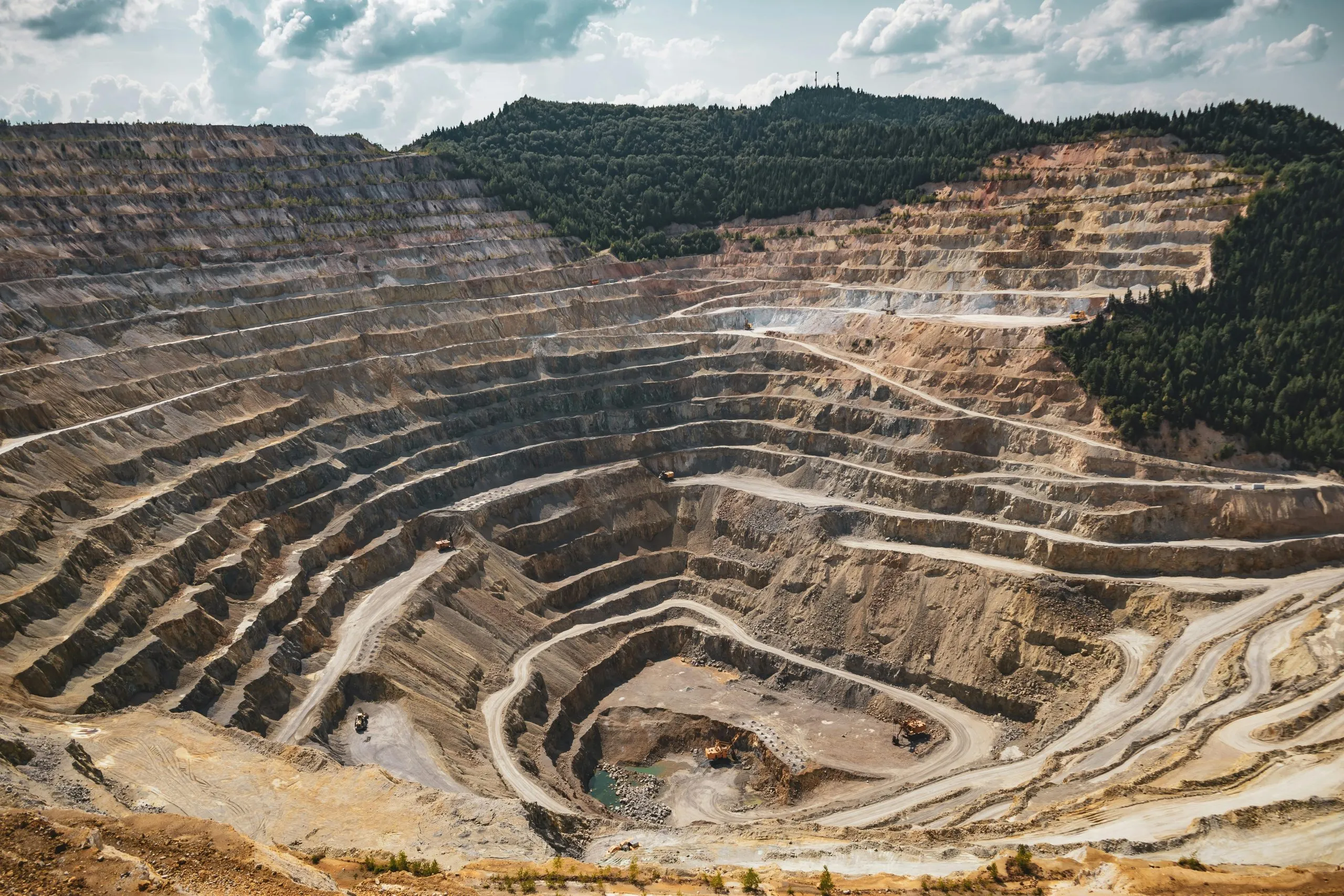
Conceptual pit optimizations
Minebright developed a pit optimization software based on the pseudoflow algorithm.
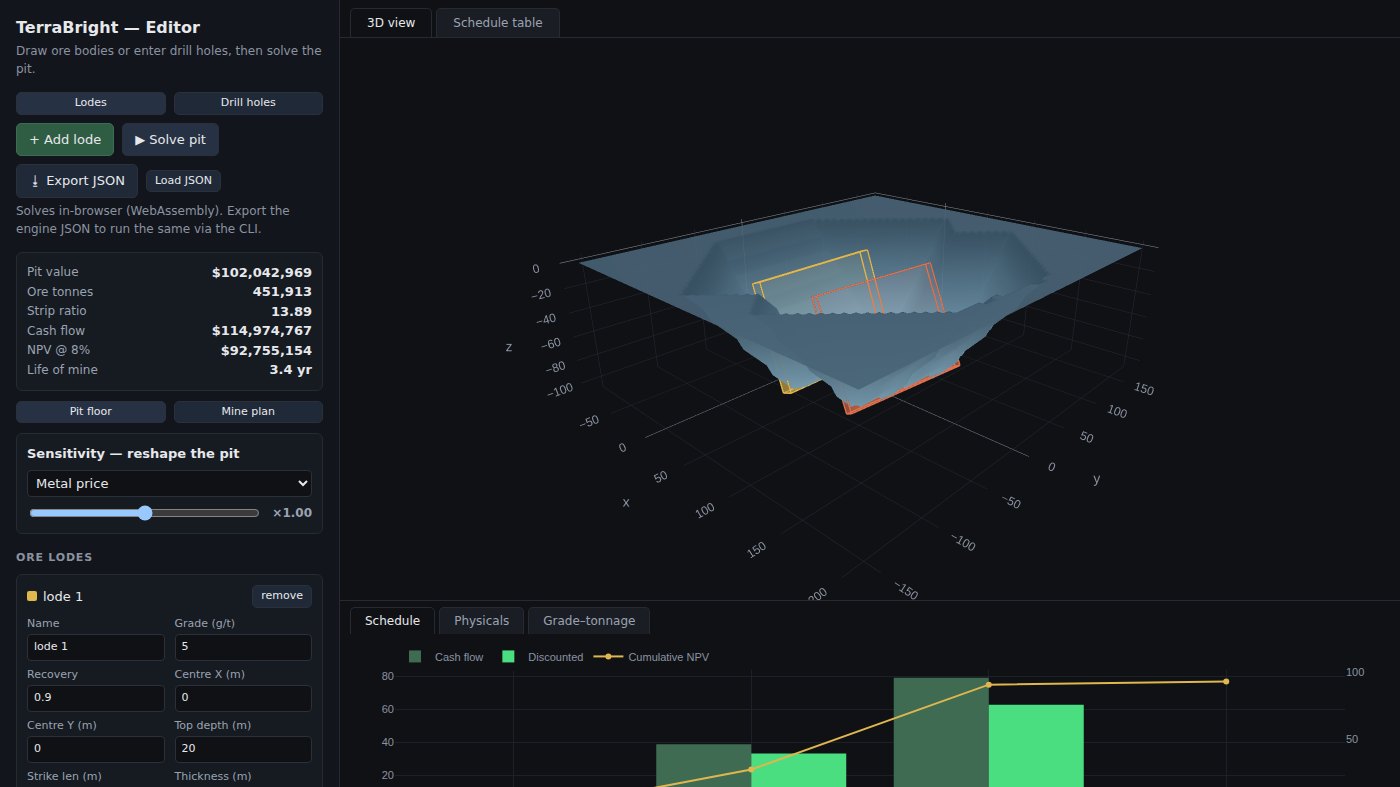
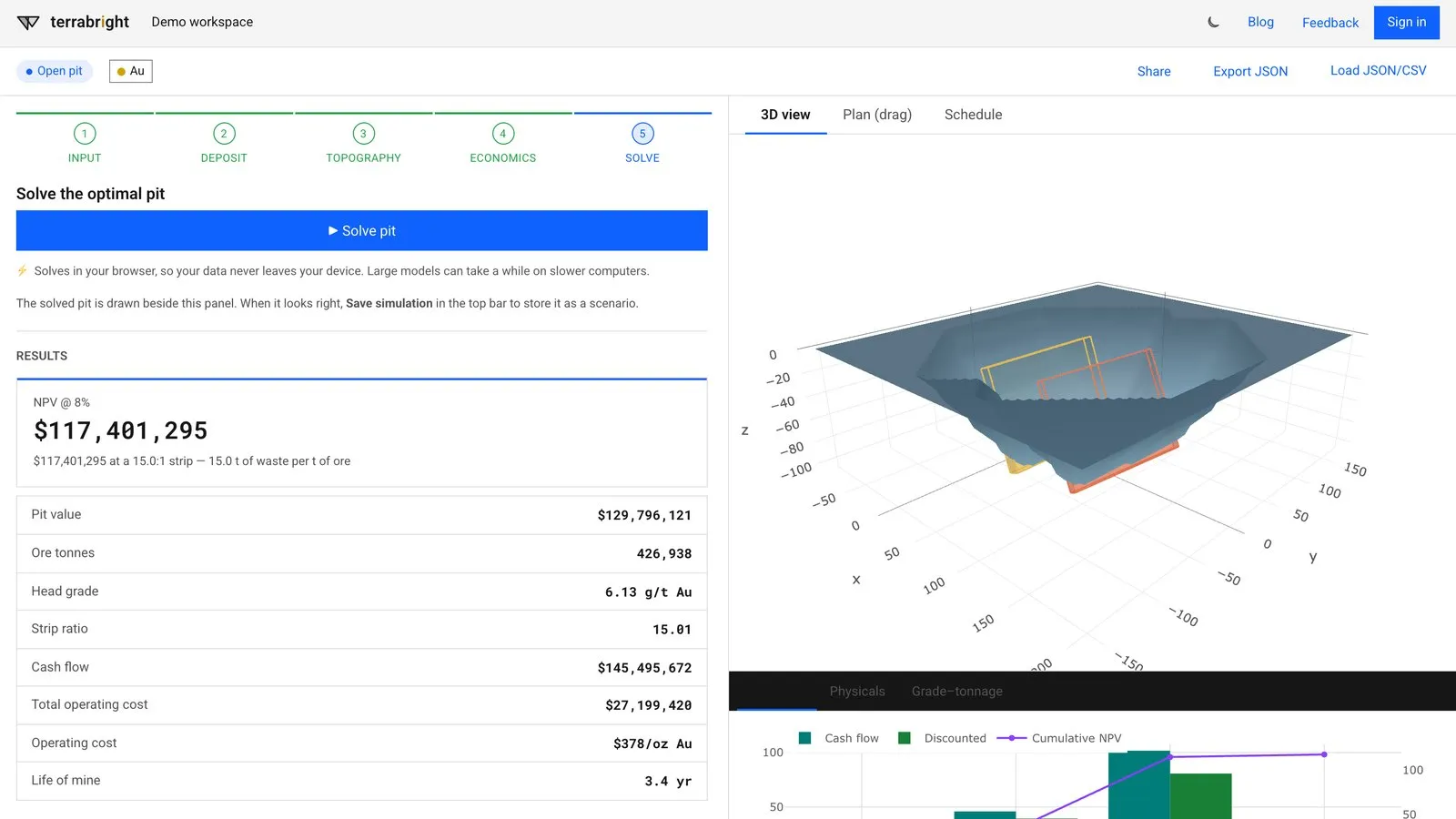
Read case studyTerrabright is web-based pit optimization software for exploration professionals. It helps explorers prioritize targets and communicate that reasoning to stakeholders. It is free to use and runs in your browser.
Exploration managers have to put spending on the most promising targets, yet rarely test a deposit’s future economic feasibility. The result is millions spent drilling targets that will never see a haul road, with a low chance of ever becoming a profitable mine.
Companies may set internal thresholds for minimum size and return, but for early to mid-stage exploration targets, geologists have few tools to test whether the deposit will meet these hurdles.
We wanted to create a tool where exploration managers could give financial reasoning for their target prioritization based on their current understanding of the deposit.
Terrabright was designed to take simple geometric inputs when defining the resource such as strike length, average width, dip, and plunge repeated for however many zones of mineralization may exist.
When defining ore bodies not in terms of a block model, it allows users to conduct sensitivity analysis not only on economic inputs such as mining costs, but also on geometric parameters such as strike length, maximum depth, or average width. Instead of a single NPV, Terrabright was designed to provide a probabilistic value to the deposit.
Terrabright allows for sophisticated sensitivity analysis as well as the creation of drill programs where conceptual discovery costs are calculated based on the existing resource and the inputted cost of drilling.
Terrabright is free to use. It runs in your browser, so your deposit is never uploaded, and the demo at terrabright.ca needs no account.
A blind study was conducted where a partnering gold mining company provided Minebright with the necessary inputs to conduct a pit optimization. The ore body was defined in terms of strike length, orientation, average width, starting depth, and maximum known depth of mineralization. All of the outputs from the Terrabright optimization had less than a 10% difference to the baseline Whittle Lerchs Grossman optimization.
After J.H. Snow, A.G. Dore and D.W. Dorn-Lopez, Risk analysis and full-cycle probabilistic modelling of prospects: a prototype system developed for the Norwegian shelf (1996).
Minebright developed a pit optimization software based on the pseudoflow algorithm.
Read case studyTell us how Terrabright would sit in your operation. An engineer replies.
Contact us