

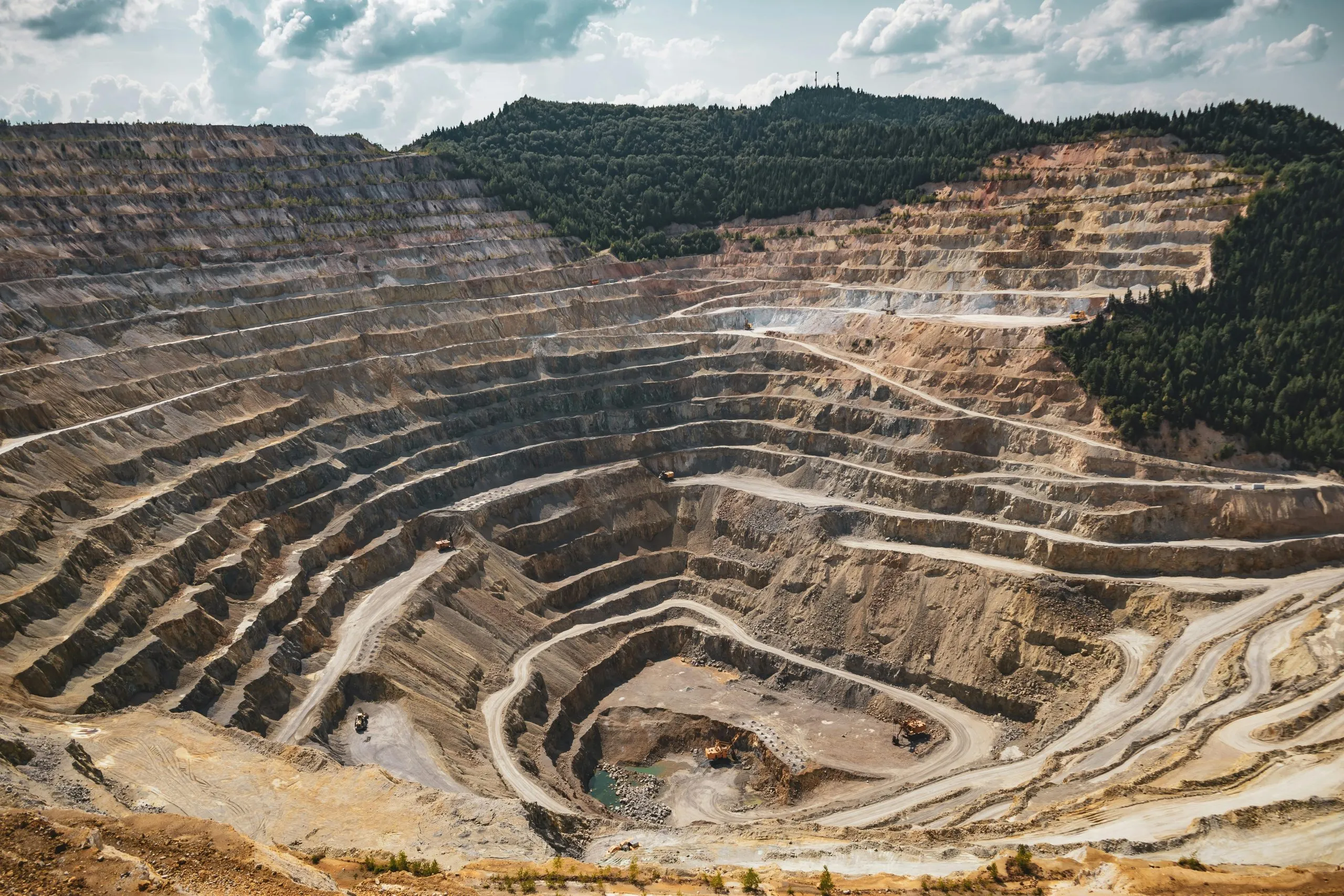
Pit Info
Pit Info is a mine production tracking and reconciliation software. Pit Info ensures metal accounting compliance by tracking each tonne from the ore source right through to the waste dumps or processing plant. All transactions are recorded to ensure the highest level of database accuracy and trust. Pit Info was designed for Mining and Geology managers who believe in transparent metal accounting and reconciliation.
The problem
Production tracking and reconciliation are difficult processes that involve multiple data sources and convoluted processes that often rely on Excel.
- Manual entry errors
- Convoluted and unauditable formulas
- No validation can cause metal imbalances when reconciling
- Average number of sources of data to reconcile monthly production
- 9
- Departments with input into reconciliation process
- 5
- Out of 10 spreadsheets contain an error
- 8
Our solution
Control and visibility over claimed and reconciled production, mined and milled, in one platform.
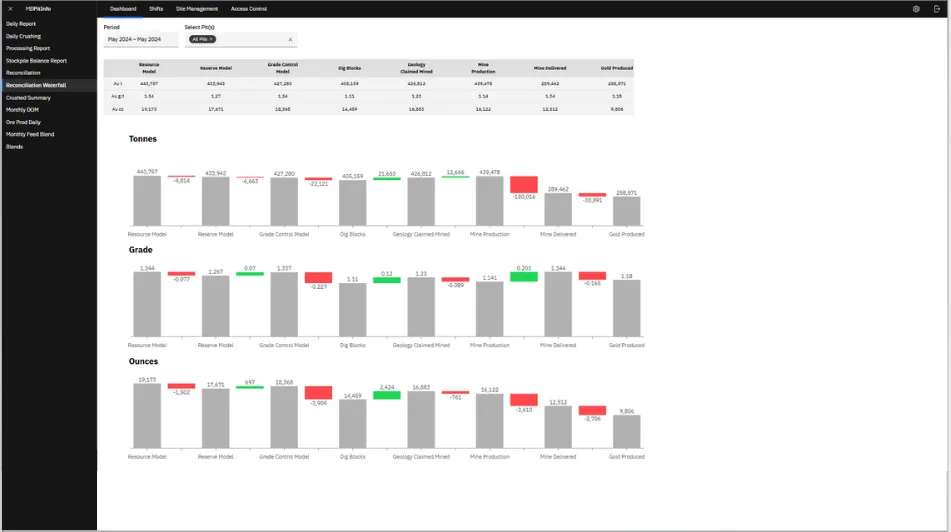
Surveys, density measurements, resampling, and EOM metal production all have flow through effects on claimed production going from the final product back to the ore source. Pit Info handles all of it, and executives and managers report from one auditable set of numbers.
What’s in Pit Info
Reconciliation
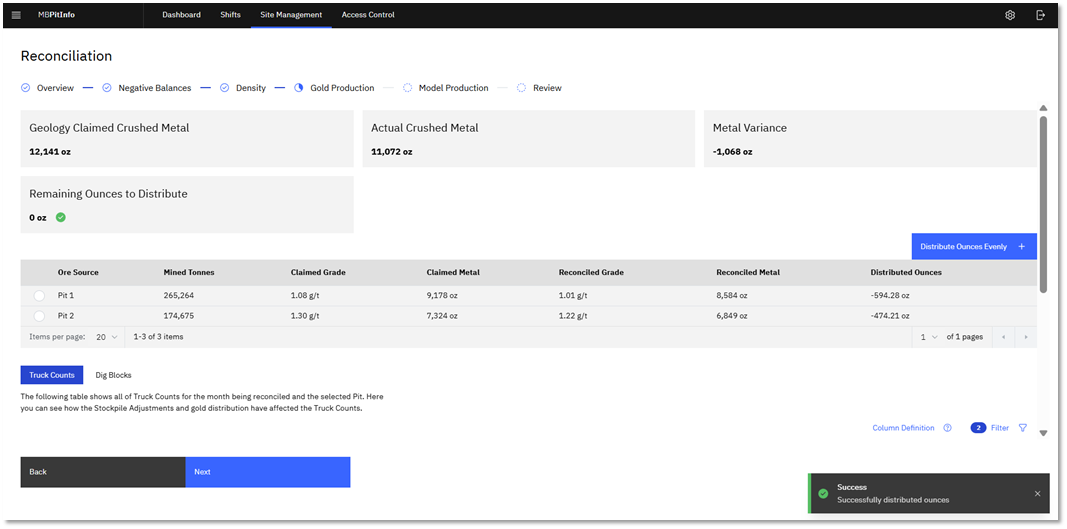
Reconciliation is made easy with Pit Info. Configurable end-of-month workflows give managers the ease of mind that processes are being followed.
Any positive or negative variance with tonnage or metal can be back allocated to ore sources. Mined, surveyed and milled tonnes are measured and compared the same way every month, which removes ambiguity and reduces contractor disputes.
Geology & Mining
Pit Info captures, analyzes and reports on everything related to geology and mining.
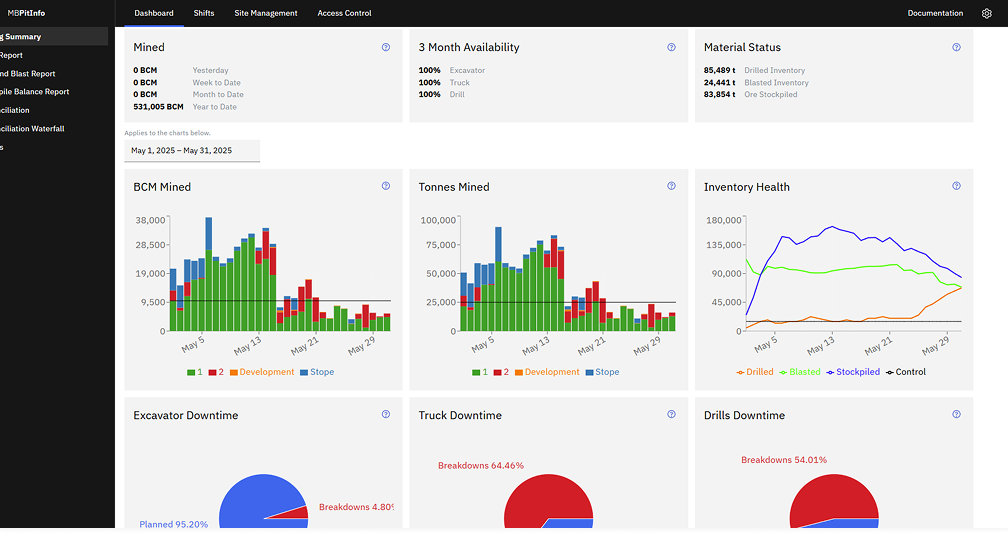
Out-of-the-box, track tonnes, grade and contained metal, dilution and ore loss at the dig block level, with full visibility on movements from ore sources and stockpiles. Compliance to plan and dilution show up early, before the ore reaches the mill.
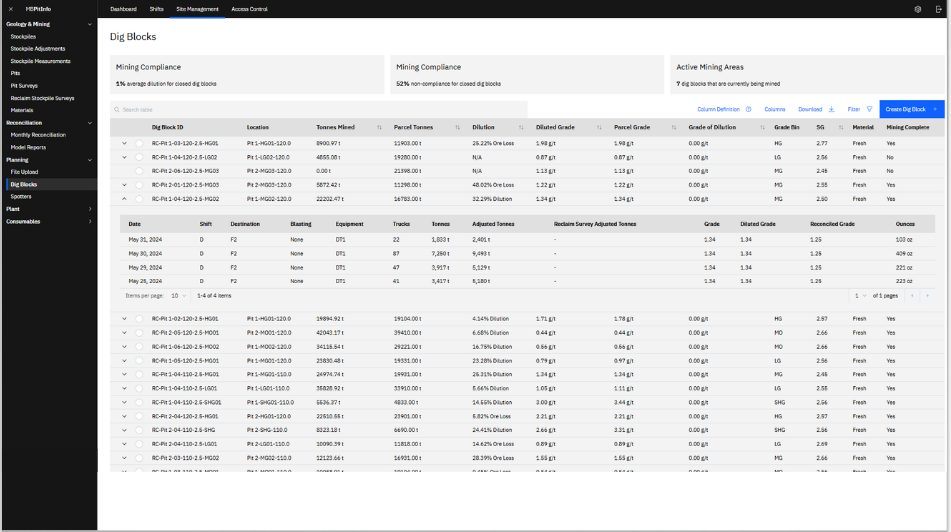
Stockpiles
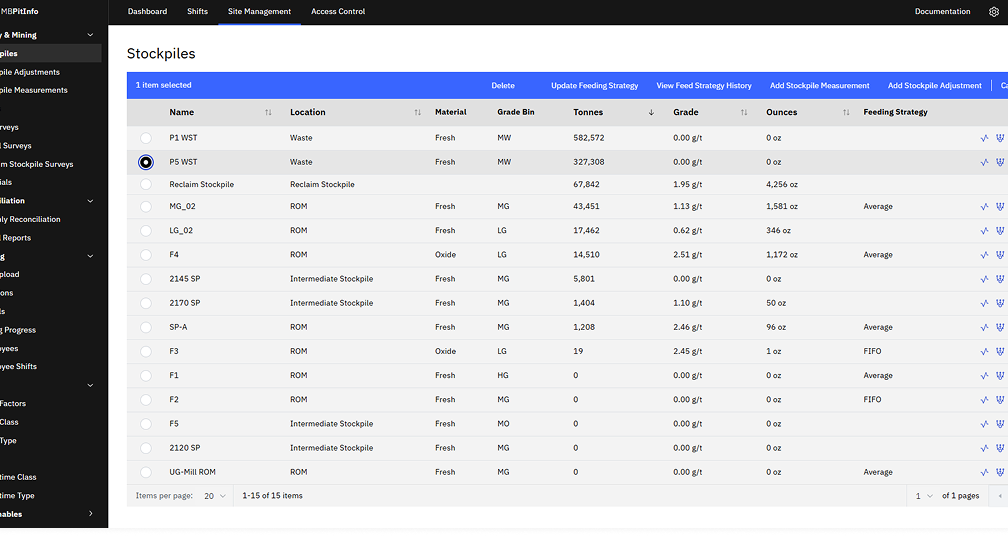
Real-time stockpile balances and grade tracking. Pit Info records every stockpile movement, feeding strategy and density update, so the figures stand up to financial audits and quarterly reporting starts from what actually sits in inventory.
Reporting
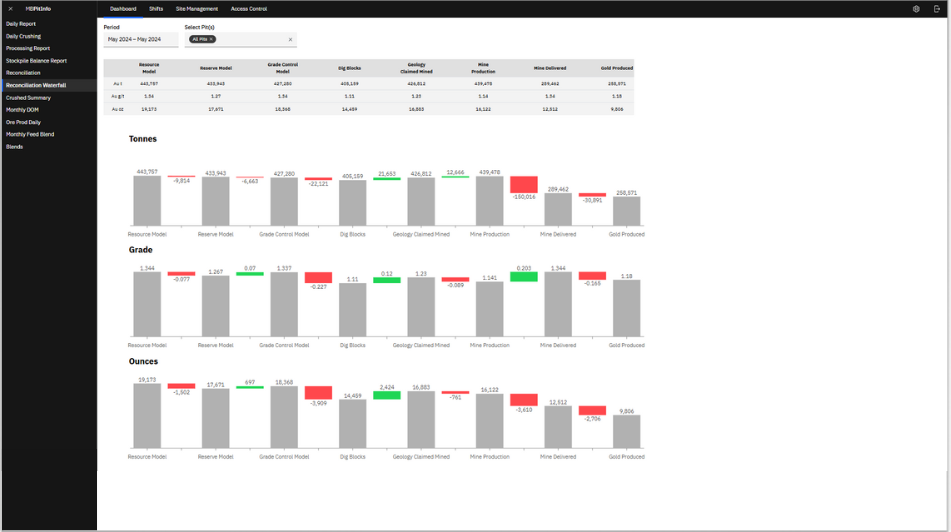
Customizable daily, monthly and year-to-date reports cover compliance to forecast, call factors and dilution trends, exportable to Excel, PDF, Word and CSV.
Pre-configured reports give more confidence in the numbers reported to market.
Mobile Plant
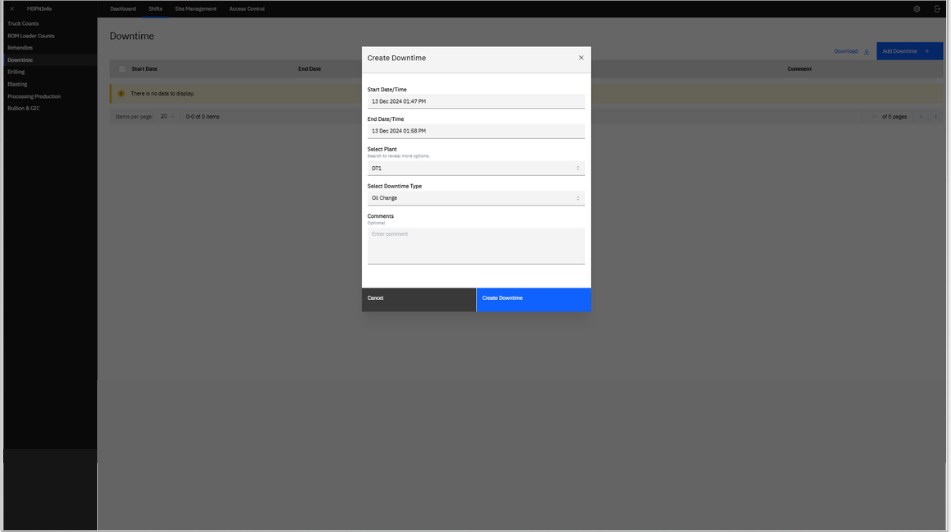
Pit Info tracks plant performance: downtime, utilization, availability, and productivity, so managers have a clear view of operations at all times.
Teams can find and address bottlenecks, maximize uptime, and improve overall productivity.
Key benefits
- Customizable warnings and error checks that follow your site’s own logic
- Reports scheduled and distributed automatically, as PDF, Excel or CSV
- Every entry time-stamped and traceable to the user who made it
- Strict workflows with built-in checks and approvals
- Integration with Power BI and third-party software
- A company-wide source of truth for production data, with 99.9% availability guaranteed for cloud-hosted options
Results
Over a month of work saved each year
The time saved from using Pit Info represents over a month of work each year.
Gold operation dilution case
$1.7M revenue loss avoided by detecting issues earlier.
What changes when reconciliation leaves the workbook
| Excel | Pit Info |
|---|---|
| Difficult to validate calculated values and requires lots of manual work. | Preconfigured and customizable warnings and errors for data input and calculated values |
| Only possible to see reconciliation factors at the pit or stage level | View the effect of stockpile surveys, and metal reconciliation down to individual truck movements |
| Excel is an inherently flexible software that does a poor job of enforcing work to be done in a certain order or way. | Configured workflows ensure that reconciliations happen as they should, including double checks and signoffs. |
| No visibility into who did what when | All transactions are recorded, including timestamps and user responsible. 100% clarity on people’s past roles in EOM. |
| Excel creates only static reports that can generate few insights | Pit Info is configurable to include dashboards or static reports. We allow third-party connection via API or direct to DB |
- Certified to ISO/IEC 27001:2022
- 24/7 support for urgent requests
- Support in English, French and Russian
- Founded in Toronto, 2021
Book a 30-minute scoping call
Tell us how Pit Info would sit in your operation. An engineer replies.
Contact us